When families first learn about ABA therapy, they often focus on what it can reduce: meltdowns, aggression, self-injury. These are real and valid concerns. But the most meaningful work of quality ABA therapy is not what it takes away. It is what it builds.
Communication, social connection, and the ability to manage daily routines independently are the skills that determine how fully a child with autism can participate in their own life. ABA therapy builds these skills systematically, one step at a time, in ways that last. For families in New Jersey and Missouri, Clearsteps ABA delivers this skill-building approach directly in the home, where learning is most meaningful and most likely to generalize.
Building Communication Skills Through ABA
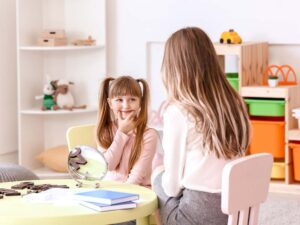
Communication development through ABA begins with an honest assessment of where a child currently is. For some children, that means working on first words or functional requests using pictures or a communication device. For others, it means expanding beyond basic vocabulary to more complex sentences, conversation skills, and the ability to express emotions and needs in appropriate ways.
Verbal Behavior therapy, which is a widely used approach within ABA, frames language as a set of functional skills rather than just words to memorize. A child learns to request what they want, to label objects and actions in their environment, to respond to questions, and eventually to initiate conversation and share information. Each of these functions is taught separately and systematically, and progress is tracked with data at every session.
For children who are not yet using verbal language, ABA supports the development of Alternative and Augmentative Communication systems. Picture exchange systems, communication apps on tablets, and speech-generating devices are all tools that can be integrated into an ABA program to give children a reliable way to communicate before spoken language emerges.
Social Skills ABA: Building Real Connection
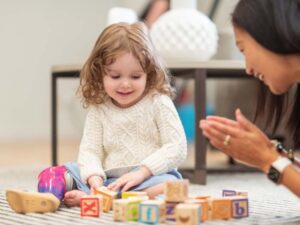
Social development is another core focus of ABA therapy social skills programs. Many children with autism have genuine social motivation but lack the specific skills that make social interaction successful. They may not know how to initiate play, how to respond when someone approaches them, how to take turns in a conversation, or how to read the nonverbal cues that communicate whether another person is interested or annoyed.
ABA therapy teaches these skills explicitly and systematically. Social skills are broken down into their component parts, each part is practiced in structured activities, and reinforcement makes the new behaviors rewarding rather than effortful. Over time, as skills become more automatic, children begin to use them spontaneously in real social situations rather than only when prompted.
Clearsteps ABA provides skill-building ABA therapy for children in New Jersey and Missouri. Learn more about services at clearstepsaba.com/our-services.
Life Skills ABA Therapy: Building Independence at Home
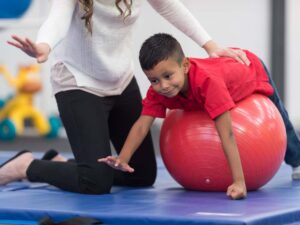
Daily living skills are the practical competencies of daily life: dressing, toileting, brushing teeth, setting a table, preparing a simple snack, managing a school bag. These are the skills that determine how independently a child can function and how much adult support they require throughout the day.
Life skills ABA therapy targets these areas through a technique called task analysis, which breaks each skill into its smallest teachable steps. A child learning to put on a shirt learns one step at a time: reaching for the shirt, orienting it correctly, inserting one arm, then the other, and pulling it down. Each step is practiced until it is consistent before the next is added. Eventually the child performs the whole sequence independently, without prompting.
In-home ABA therapy is particularly well-suited for daily living skills because sessions happen during real routines. Teaching a child to wash their hands during an in-home session means practicing in their own bathroom sink with their own soap, which makes the skill far more likely to transfer to every time they need to wash their hands.
Skill Acquisition ABA: How Progress Is Measured
Skill acquisition in ABA is not subjective. Every goal in a child’s treatment plan is defined in observable, measurable terms, and progress toward each goal is tracked through data collected during every session. This data allows the BCBA to see clearly whether a skill is being acquired at the expected pace, whether the teaching approach is working, and when it is time to move to the next target.
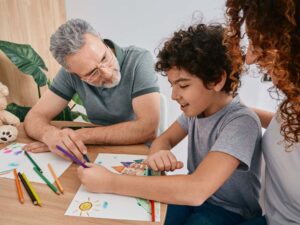
Families receive regular updates on their child’s progress, and treatment plan reviews involve caregivers directly so that the goals being targeted remain relevant and meaningful to what the family needs most. Autism skill building is a collaborative process, and the family’s input drives where the program focuses.
Child Independence Skills: The Long-Term Goal
The ultimate goal of every skill targeted in ABA therapy is greater independence for the child and greater confidence for the family. A child who can communicate their needs, participate meaningfully in social situations, and manage their own daily routines is a child who has more options, more agency, and more capacity to engage with the world on their own terms.
At Clearsteps ABA, every session is oriented toward this long-term vision. We are not simply working on today’s goals. We are building the foundation for the kind of independence and participation that will matter throughout your child’s life.
Get Started With ABA Therapy in New Jersey or Missouri
If your child is between the ages of two and twelve and you are looking for structured, in-home ABA therapy that builds real communication, social, and daily living skills, Clearsteps ABA is ready to help.
Call our Missouri team at (816) 877-9097 or our New Jersey team at (732) 703-7133, email family@clearstepsaba.com, or visit clearstepsaba.com/contact to begin the enrollment process today.