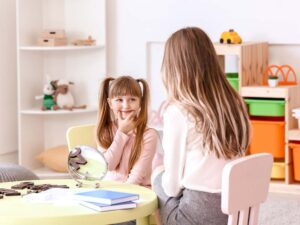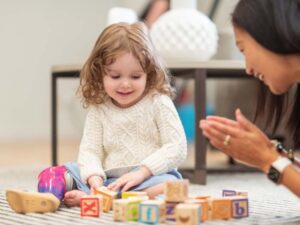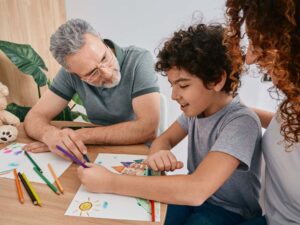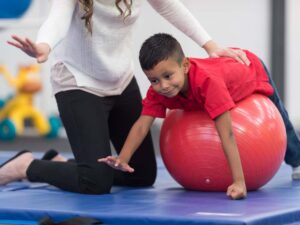
ABA therapy is often thought of as something that happens inside the home or in a clinic. And it is true that home-based ABA programs form the backbone of care for many children with autism. But real life does not happen only at home. Children go to parks, grocery stores, libraries, and restaurants. They navigate sidewalks, waiting rooms, and busy playgrounds. These environments have their own demands, and the skills needed to manage them successfully often require direct practice in the places where they matter.
Community-based ABA therapy addresses this directly. It takes the evidence-based principles of ABA into the real-world settings where children with autism need to develop confidence and competence. For families in New Jersey and Missouri, Clearsteps ABA incorporates community-based practice as part of a comprehensive in-home program.
The Generalization Problem in ABA
One of the most well-documented challenges in ABA therapy is generalization: the ability to use a skill learned in one setting in a completely different setting. A child who has mastered asking for a snack at home may not spontaneously use that same skill at a friend’s house, at a community center, or in a store. A child who has learned to wait their turn during a game at home may struggle to apply that same patience in a playground line.
Generalization does not happen automatically. It has to be planned for and practiced across multiple environments, people, and materials. Community-based ABA therapy is one of the most direct and effective ways to build this generalization because it provides structured practice in the exact settings where skills need to transfer.
What Community ABA Therapy Looks Like in Practice
Community ABA therapy sessions are conducted by a trained therapist, with BCBA supervision, in real-world settings outside the home. Sessions are planned around specific goals from the child’s treatment plan and tied to the environments that are most relevant to that child’s daily life.
A child working on social skills might practice initiating a greeting with a librarian. A child working on following multi-step directions might practice ordering at a counter. A child working on waiting and impulse control might practice standing in line at a community program. A child working on community safety skills might practice pedestrian safety on a familiar neighborhood route.
These are not simulated scenarios. They are real situations with real people, real consequences, and real opportunities for meaningful practice. This is what makes community-based ABA so valuable for autism skill development in children who are ready for it.
Clearsteps ABA’s services support children’s skill development across home and community environments. Learn more at clearstepsaba.com/our-services.
Community ABA Programs in New Jersey and Missouri
For families in New Jersey, community ABA programs can take place in the many parks, libraries, community centers, and public spaces that are already part of daily life in towns like Lakewood, Newark, Elizabeth, Irvington, and Jersey City. The Garden State’s dense, walkable communities offer rich environments for community-based skill practice.
In Missouri, Kansas City and surrounding communities offer similarly diverse community settings: neighborhood parks, shopping areas, public libraries, and local businesses. Community programs in these settings allow children to build the social skills and functional life skills that school and family life will require of them as they grow.
When Is a Child Ready for Community-Based ABA?
Not every child in ABA therapy is ready for community sessions from the start. Community environments introduce variability, sensory complexity, and unpredictability that can be overwhelming for children who are still building foundational skills at home. In general, community-based practice is introduced gradually as a child demonstrates consistent skill use in the more controlled home environment.
Your child’s BCBA determines when community sessions are appropriate and what specific goals they should target. The transition to community practice is planned carefully, with the goal of setting your child up for success rather than exposing them to situations where they are not yet equipped to manage the demands.
Early Intervention ABA and Community Skills
For children receiving early intervention ABA, community-based activities often focus on foundational social skills: greeting familiar adults, following basic community rules, tolerating sensory-rich environments, and participating in simple community routines. These early community experiences build the tolerance and flexibility that allow children to benefit from community participation as they grow.
The earlier children begin building community competence through structured ABA practice, the better prepared they are for the social demands of school, extracurricular activities, and eventually independent community participation.
Prepare Your Child for the Real World
The skills your child builds in the home are the foundation. Community-based ABA therapy is how those skills become truly portable, available to your child in every setting they inhabit now and in the years ahead.
To learn more about Clearsteps ABA’s approach to community-based skill building, call (816) 877-9097 for Missouri or (732) 703-7133 for New Jersey, email family@clearstepsaba.com, or visit clearstepsaba.com/contact to get started.