If you have spoken with anyone in the autism community, you have almost certainly heard the phrase early intervention. It comes up again and again, and for good reason. The research on ABA therapy outcomes is remarkably consistent: children who begin intervention earlier make stronger gains, and those gains tend to be more durable over time.
Clearsteps ABA specializes in serving children between the ages of two and twelve across New Jersey and Missouri because this age range represents the window when ABA therapy has the greatest potential to shape a child’s developmental trajectory. Understanding why this window matters can help families make more confident decisions about when and how to start.
Why the Early Years Are So Responsive to Intervention
The young brain is characterized by what neuroscientists call neuroplasticity: the capacity to reorganize itself in response to experience and learning. During the first several years of life, the brain forms connections at a rate that will never occur again. This means that structured, intensive learning experiences during early childhood have a far greater impact on development than the same experiences would have later.
ABA therapy critical window research consistently shows that children who begin early intervention ABA before the age of four make the largest gains in IQ, language, and adaptive behavior. Children who begin between four and seven also show significant improvement. And children who begin later, up through age twelve, still benefit meaningfully from ABA therapy, though the gains are generally more incremental than those achieved with very early intervention.
What Early Intervention ABA Targets
For very young children, ABA therapy targets the foundational skills that all later development builds upon. These include joint attention, which is the shared focus between a child and another person on an object or activity. Joint attention is a precursor to language, social interaction, and learning from others, and it is one of the earliest targets in early intervention programs for toddlers with autism.
Early intervention ABA also targets imitation, which allows children to learn from observation. A child who can imitate the actions and sounds they see is positioned to acquire language and social skills far more rapidly than a child who cannot yet imitate. Other early targets include functional play, following simple instructions, tolerating new people and environments, and making basic requests.
The School-Age Years: Building on the Foundation
Children who receive strong early intervention ABA enter the school years with a meaningful head start. They are more likely to be able to participate in general education classrooms, form relationships with peers, and manage the social and behavioral demands of a school environment. The skills they built between two and five become the platform from which everything else grows.
For school-age children between six and twelve, ABA milestones shift toward greater independence in daily living, more sophisticated social communication, self-advocacy skills, academic readiness, and community participation. Pediatric ABA programs for this age group are often delivered alongside school support, with the ABA therapist and school team coordinating to ensure consistent skill development across both settings.
Clearsteps ABA serves children ages 2 to 12 in New Jersey and Missouri. Learn more about early intervention services at clearstepsaba.com/early-intervention-aba.
In-Home ABA Therapy and the Developmental Window
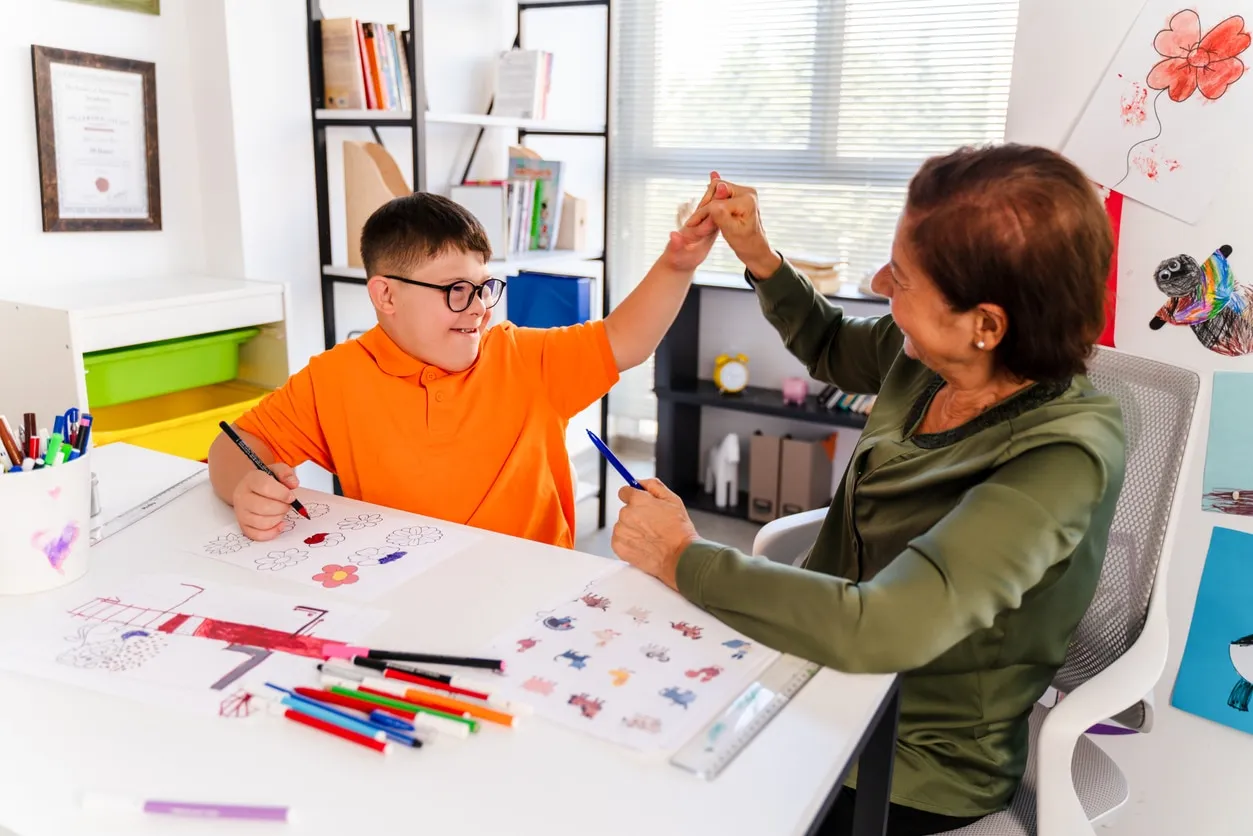
In-home ABA therapy is particularly well-matched to the developmental needs of young children. For toddlers and preschoolers, familiar environments reduce anxiety and improve engagement. A young child who is comfortable in their own home is more available for learning than a child who is overwhelmed by an unfamiliar clinic setting.
Home-based sessions also allow ABA therapists to directly embed skill practice into the routines that already structure a young child’s day. Breakfast, bath time, getting dressed, and play all become structured learning opportunities without requiring any disruption to the family’s normal schedule.
What Happens if a Family Misses the Early Window
It is worth being direct about this: waiting is costly. Every month a child spends without appropriate ABA therapy during the critical window is a month of structured learning opportunity that cannot be recovered. This is not intended to create guilt for families who faced delays outside their control. Insurance battles, waitlists, and diagnostic delays are real barriers that many families navigate.
But it is a reason to act quickly once a path forward is available. If your child has a diagnosis and you are ready to begin, reaching out to an ABA provider now rather than later is the most important thing you can do.
ABA Therapy Effectiveness Across the Age Range
ABA therapy effectiveness does not disappear after early childhood. Children between eight and twelve who receive quality ABA therapy continue to make meaningful progress, particularly in areas like social communication, executive function, independence, and community participation. Behavior therapy tips for older children often emphasize building self-monitoring, self-advocacy, and the kind of flexible thinking that supports school and social success.
Autism support across New Jersey and Missouri through Clearsteps ABA is available for every child between two and twelve, with programs tailored to the developmental stage and specific needs of each individual child.
Start Now
The best time to start ABA therapy is as early as possible. The second-best time is today. Clearsteps ABA is ready to guide your family through every step of the process, from insurance verification to the first session and beyond.
Call (816) 877-9097 for Missouri or (732) 703-7133 for New Jersey, email family@clearstepsaba.com, or visit clearstepsaba.com/contact to take the first step.